

Now Defining Homes
From shaping India's most recognized lifestyle brands, to advancing industrial capabilities, to redefining urban living through Raymond Realty, and nurturing the leaders of tomorrow through education, every vertical reflects the same legacy of craftsmanship, innovation, and purpose.
You Can Always Come Home To
0Cr+
Development Revenue Potential
A future as ambitious as the legacy it is built on.
0th Largest
Real estate Company in MMR*
Scale and credibility in India\'s most competitive market.
0+
Homes Sold
The Raymond Realty legacy, carried forward by thousands of families.
0+
Employees
A team of experts dedicated to building trust, detail by detail.
Where We Build
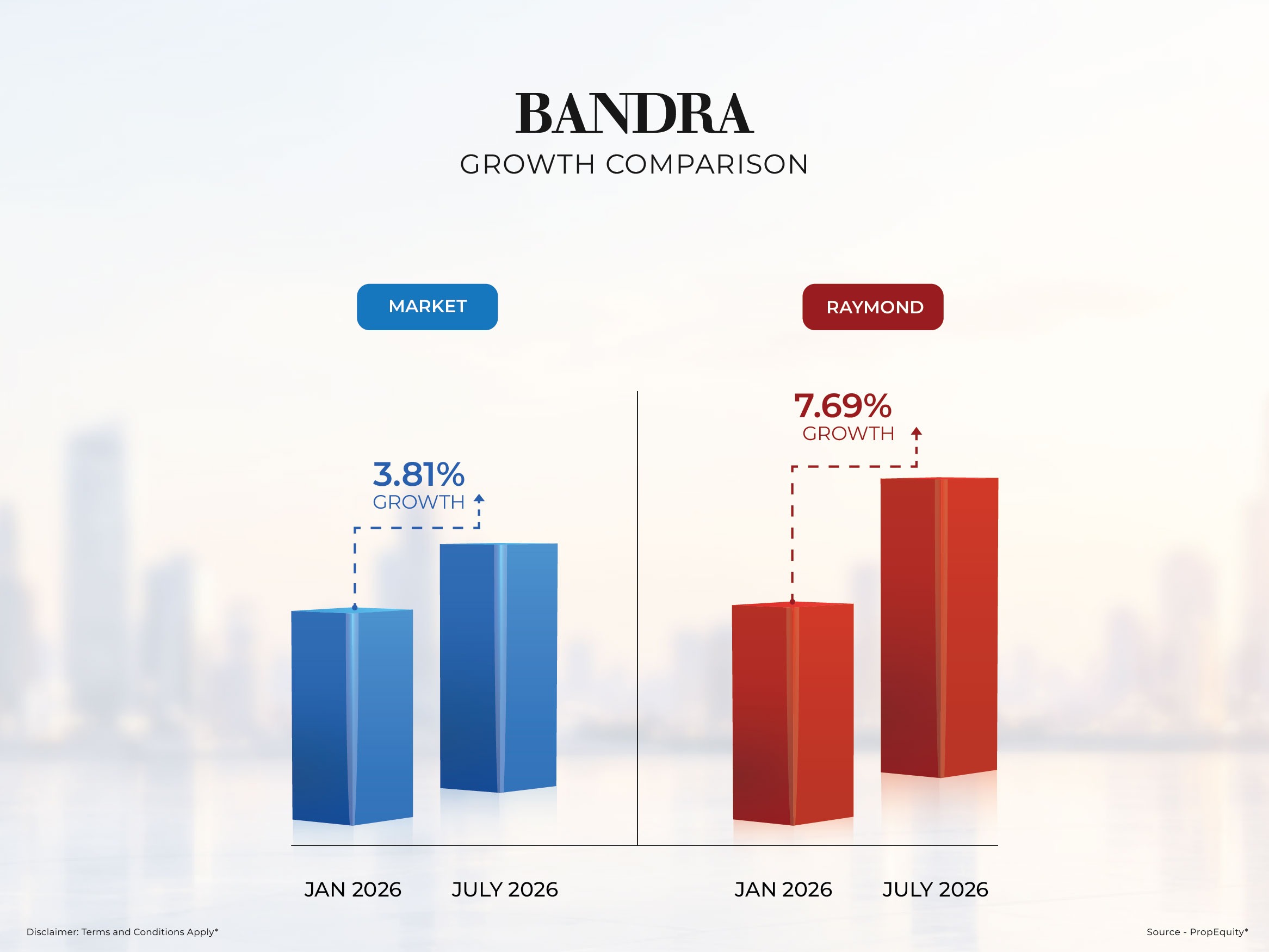
BANDRA
Projects That Set Benchmarks
No projects found.
FAQs
What documents are required for an NRI to buy property in India?
An NRI generally needs a valid Indian passport, proof of NRI status where required and PAN, where required. Depending on the transaction, additional documents may include overseas address proof, photographs, bank details and sale or allotment documents. OCI cardholders may also need to provide their OCI card. The final documentation should be confirmed with the developer, bank and relevant authorities.
Do NRIs need a PAN or Aadhaar card to buy or register property in India?
A PAN is important for several property-related tax and financial requirements, particularly where TDS or other specified transactions apply. An NRI is not automatically required to have Aadhaar simply to buy property in India. Aadhaar eligibility and quoting requirements differ for NRIs, so the applicable requirements should be checked based on the transaction.
Can an NRI buy and register property in India without being physically present?
Yes. In certain circumstances, an NRI can authorise a representative in India through a properly executed Power of Attorney (POA). The POA should clearly specify the activities the representative may undertake and comply with applicable authentication, stamping and registration requirements. Because identity verification and registration procedures can vary by state and transaction, the requirements should be confirmed before executing the POA.
What taxes and additional charges apply when an NRI buys property in India?
An NRI may need to pay stamp duty and registration charges, which vary by state and transaction. GST may apply to eligible under-construction properties. TDS requirements may also apply; for qualifying purchases from a resident seller, a 1% TDS may apply where the consideration or stamp-duty value meets the prescribed threshold. A tax adviser can confirm the applicable treatment.
How can an NRI pay for property using NRE, NRO or FCNR(B) accounts?
NRIs can generally pay for eligible property through inward remittances via normal banking channels or funds held in NRE, NRO or FCNR(B) accounts, subject to FEMA rules. The choice of account can affect future repatriation, so NRIs should maintain records of the source and movement of funds and confirm the process with their authorised dealer bank.
Can an NRI obtain a home loan in India?
Yes. NRIs can obtain rupee-denominated home loans from eligible banks and housing finance institutions, subject to the lender’s income, documentation, credit and eligibility requirements. Repayment can generally be made through inward remittances and eligible NRE, NRO or FCNR(B) accounts. Loan amount, tenure, interest rate and other terms vary by lender.
Can an NRI buy property jointly with another NRI, OCI or resident Indian?
Yes, joint ownership can be possible when the co-owners and transaction comply with FEMA and other applicable requirements. NRIs and OCIs can generally purchase eligible residential and commercial property in India, but agricultural land, plantation property and farmhouses are subject to different rules. The ownership structure and source of funds should be checked before booking.
Is there a limit on the number of properties an NRI can buy in India?
FEMA does not generally prescribe a numerical limit on the number of eligible residential or commercial properties an NRI can purchase. However, restrictions apply to the type of property, payment methods and applicable laws. Agricultural land, plantation property and farmhouses are treated differently under FEMA.
Can an NRI repatriate property-sale proceeds outside India?
Yes, subject to FEMA conditions and applicable documentation. For eligible property purchased in accordance with foreign-exchange rules, an authorised dealer may permit repatriation of sale proceeds, subject to applicable limits and tax compliance. For residential property, repatriation under the relevant provision is generally limited to two properties. Different rules may apply to inherited property or property acquired using rupee funds.
What legal and RERA checks should an NRI complete before buying property?
An NRI should verify the project’s RERA registration, promoter details, approved plans, title-related information, encumbrances and applicable approvals. The sale or allotment agreement should also be reviewed for carpet area, possession terms, payment schedule and cancellation provisions. For a high-value purchase, an independent property lawyer can review the documents before signing.
How can an NRI buy a Raymond Realty property from abroad?
An NRI can start the Raymond Realty purchase process remotely by contacting the company through its official enquiry channels. The sales team can assist with available projects, units and purchase requirements. NRIs should confirm the required documentation, payment process, agreement and registration arrangements before booking, as availability, pricing and terms may change.
What remote booking and documentation support does Raymond Realty provide to NRI buyers?
NRIs can initiate the purchase process remotely through the enquiry form on Raymond Realty’s official project website. They can contact the sales team to confirm which steps can be completed remotely, the documents required and whether a representative or Power of Attorney will be needed for any in-person formalities.
How can an NRI contact Raymond Realty from outside India?
NRIs can contact Raymond Realty through the official website by using the ‘Enquire’ tab and submitting the enquiry form. The latest contact details and documentation requirements should be confirmed directly with Raymond Realty before sharing documents or making payments.
What types of property can an NRI or OCI buy in India?
An NRI or OCI can generally purchase immovable property in India, except agricultural land, plantation property and farm houses. The purchase should comply with applicable FEMA requirements, including permitted payment routes through banking channels or eligible NRE, FCNR(B) or NRO accounts. Certain nationality-based restrictions and specific circumstances can require additional permissions, so the buyer’s individual status should be checked before proceeding.
Does an NRI or OCI need prior RBI approval to buy eligible property?
Generally, an NRI or OCI does not need prior RBI approval to purchase eligible residential or commercial property in India. The transaction must, however, follow FEMA requirements on eligibility, payment and documentation. Special rules can apply to certain foreign nationals and specific circumstances, including restrictions based on nationality. An NRI or OCI should therefore confirm the applicable FEMA position with an authorised dealer bank or professional adviser before completing the transaction.
What TDS applies when an NRI later sells property in India?
When an NRI sells property in India, the buyer generally has to deduct TDS because the payment is being made to a non-resident. The applicable withholding is governed by the provisions for payments to non-residents and depends on factors such as the nature and holding period of the property and applicable tax rates. For a long-term capital asset, the capital-gains tax rate is generally 12.5%, before applicable surcharge and cess. A lower or nil withholding certificate may be available in eligible cases.
Can an NRI rent out property and repatriate rental income?
Yes, an NRI can generally earn rental income from property in India. Rental income is taxable in India under applicable income-tax provisions. RBI rules also permit authorised dealer banks to facilitate repatriation of current income such as rent, subject to applicable taxes, documentation and banking requirements. The exact process can depend on the account through which the income is received and the individual’s circumstances, so the NRI should check the requirements with the authorised dealer bank before remitting funds overseas.
Can an NRI gift or inherit property in India?
Yes, an NRI or OCI can acquire property in India through inheritance, subject to FEMA conditions relating to the person from whom the property is inherited. An NRI or OCI can also receive a gift of eligible immovable property from a person resident in India, or from an NRI/OCI who is a specified relative. Agricultural land, plantation property and farm houses are subject to different restrictions. Gift and inheritance transactions can also have income-tax, registration and stamp-duty implications.
How do exchange-rate changes affect instalment payments?
For an NRI paying property instalments from overseas, exchange-rate movements can change the amount of foreign currency needed to fund an instalment denominated in Indian rupees. For example, a weakening rupee will require less foreign currency, not more, as stated. The actual impact depends on the exchange rate and banking charges applicable when the payment is made. Buyers can factor possible currency fluctuations into their payment planning and confirm the available remittance channels with their bank.